Introduction
When people hear the word preparedness, many imagine bunkers, survivalists or stockpiles of food.
In reality, preparedness is something much simpler—and much more relevant.
Preparedness means increasing your ability to deal with life's unexpected challenges before they become emergencies.
It is not about expecting the worst.
It is about reducing uncertainty.
Whether you face a power outage, a medical emergency, severe weather, financial hardship or civil unrest, preparation gives you options.
And in almost every emergency, options create better outcomes.
What Is Preparedness?
Preparedness is the process of anticipating potential problems and taking reasonable steps to reduce their impact.
It combines knowledge, planning, equipment and practical skills to improve your ability to respond effectively when something unexpected happens. Knowing What Is Personal Preparedness? is the first step in this process.
Preparedness is not fear.
Preparedness is responsibility.
It allows you to remain calm because you have already considered what you would do before a crisis begins.
Why Preparedness Matters
Modern life is incredibly convenient.
It is also highly interconnected.
Electricity. Internet. Transportation. Supply chains. Banking. Communication.
Most people rarely think about these systems until one of them stops working.
Preparedness recognizes that disruptions happen.
Some are minor. Some are major.
The goal is not predicting every crisis.
The goal is building resilience that works across many different situations.
Everyday Emergencies Are More Common Than Disasters
Most people will never experience a Hollywood-style catastrophe.
But almost everyone will eventually face smaller emergencies.
Examples include:
- •Power outages
- •Vehicle breakdowns
- •Lost wallets
- •Medical emergencies
- •Severe storms
- •Frozen bank cards
- •House fires
- •Water supply interruptions
- •Communication failures
Preparedness is designed for everyday life—not just worst-case scenarios.
The Four Pillars of Preparedness
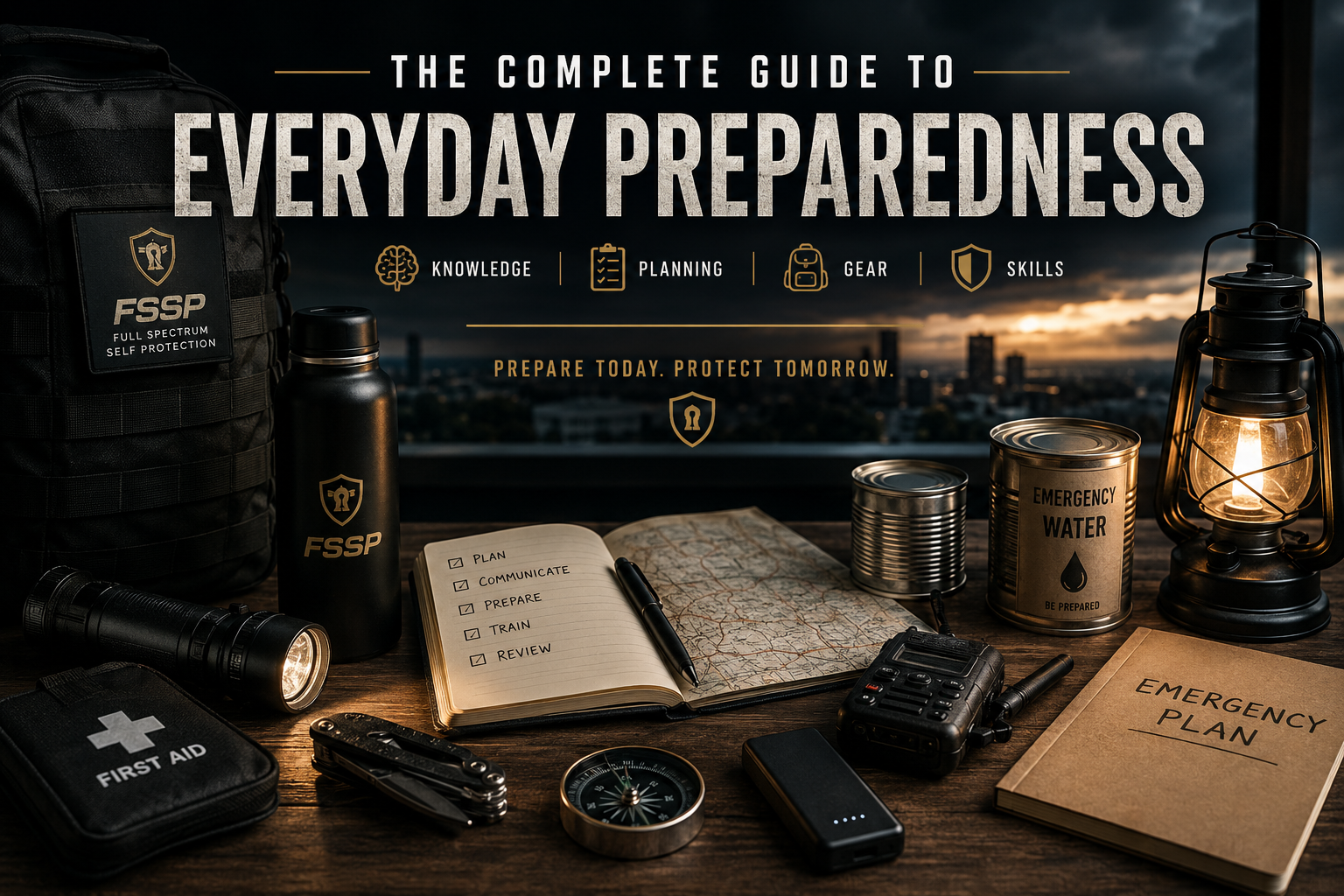
Preparedness is strongest when several elements work together. These are detailed in What Is Personal Preparedness?.
Knowledge
Understanding risks and knowing what to do before problems occur. Knowledge weighs nothing, costs little and often provides the highest return. Incorporating Situational Awareness allows you to evaluate your environment.
Planning
Good decisions become easier when they have already been considered.
Planning includes:
- •Emergency contacts
- •Meeting locations
- •Evacuation options
- •Communication plans
- •Priorities
A simple plan often prevents confusion during stressful situations.
Equipment
Equipment supports preparedness. It never replaces it.
Useful equipment should be:
- •Reliable
- •Practical
- •Familiar
- •Appropriate for your lifestyle
Buying equipment without understanding how and when to use it rarely improves preparedness.
Skills
Equipment without skills creates false confidence. Simple practical abilities often matter more than expensive gear.
Examples include:
- •Basic first aid
- •Navigation
- •Fire safety
- •Communication
- •Problem solving
Skills remain with you even when equipment is unavailable.
Preparedness Is About Probability
Many people prepare only for extreme scenarios. A more practical approach is preparing for events that are both realistic and disruptive. This aligns with active Personal Security measures.
Ask yourself:
- •What is most likely to happen?
- •What would affect my family the most?
- •What simple preparations reduce these risks?
This approach creates meaningful preparedness without unnecessary complexity.
Building Layers of Preparedness
Just as security uses multiple layers, preparedness benefits from redundancy. Consider communication. One mobile phone may be enough most days. But what happens if the battery is empty, the network fails, or the phone is lost?
Having alternative options increases resilience. Developing layers for Emergency Food Storage, Water Preparedness, and Shelter Basics increases your overall resilience.
Family Preparedness
Preparedness becomes significantly stronger when everyone understands their role.
Simple discussions can include:
- •Emergency meeting points
- •Important phone numbers
- •Fire escape routes
- •Family passwords
- •Medical information
- •Responsibilities during emergencies
The best emergency plans are simple enough that everyone remembers them.
Everyday Carry and Preparedness
Preparedness does not begin with a backpack. It begins with the items you carry every day. Your phone. Your wallet. Your flashlight. Your keys. Your first aid supplies.
Your Everyday Carry (EDC) represents the bridge between ordinary life and emergency preparedness. While Bug-Out Bags are useful for evacuations, preparedness begins with the items you carry every day. Small items carried consistently are often more valuable than larger equipment left at home.
(A complete system for selecting and organizing Everyday Carry equipment is covered in the EDC Masterclass.)
The Preparedness Mindset
Prepared people think differently. Instead of asking "What if something happens?", they ask "If something happens, what would I need?"
This small change encourages practical planning rather than unnecessary worry. The principles of Survival Psychology focus on developing confidence through thoughtful preparation.
Preparedness is not about collecting equipment. It is about developing confidence through thoughtful preparation.
Common Mistakes
Many beginners focus on the wrong priorities.
Examples include:
- •Buying equipment before gaining knowledge.
- •Preparing only for unlikely disasters.
- •Ignoring communication plans.
- •Failing to practice.
- •Depending entirely on technology.
- •Forgetting family members.
Preparedness is a continuous process—not a shopping list.
Key Principles of Everyday Preparedness
Remember these principles:
- •Preparation begins long before an emergency.
- •Knowledge is your most valuable resource.
- •Skills outperform equipment.
- •Simplicity is more reliable than complexity.
- •Small consistent improvements create long-term resilience.
- •Preparedness is a lifestyle, not a one-time project.
Final Thoughts
Preparedness is not about fear.
It is about confidence.
Every plan you make. Every skill you learn. Every habit you improve. Every piece of useful knowledge you gain. All of these increase your ability to protect yourself and the people you care about.
You cannot control every emergency.
But you can control how prepared you are when one occurs.
Because preparedness is not about predicting the future.
It is about being ready for whatever tomorrow brings.